In a 6-3 ruling, the Supreme Court struck down a large portion of President Donald Trump’s global tariff program, overturning “reciprocal” tariffs and duties directly linked to any emergency trade proclamation.
The majority held that the import taxes exceeded the limits of the 1977 International Emergency Economic Powers Act (IEEPA), which does not authorize broad, long term import taxes.
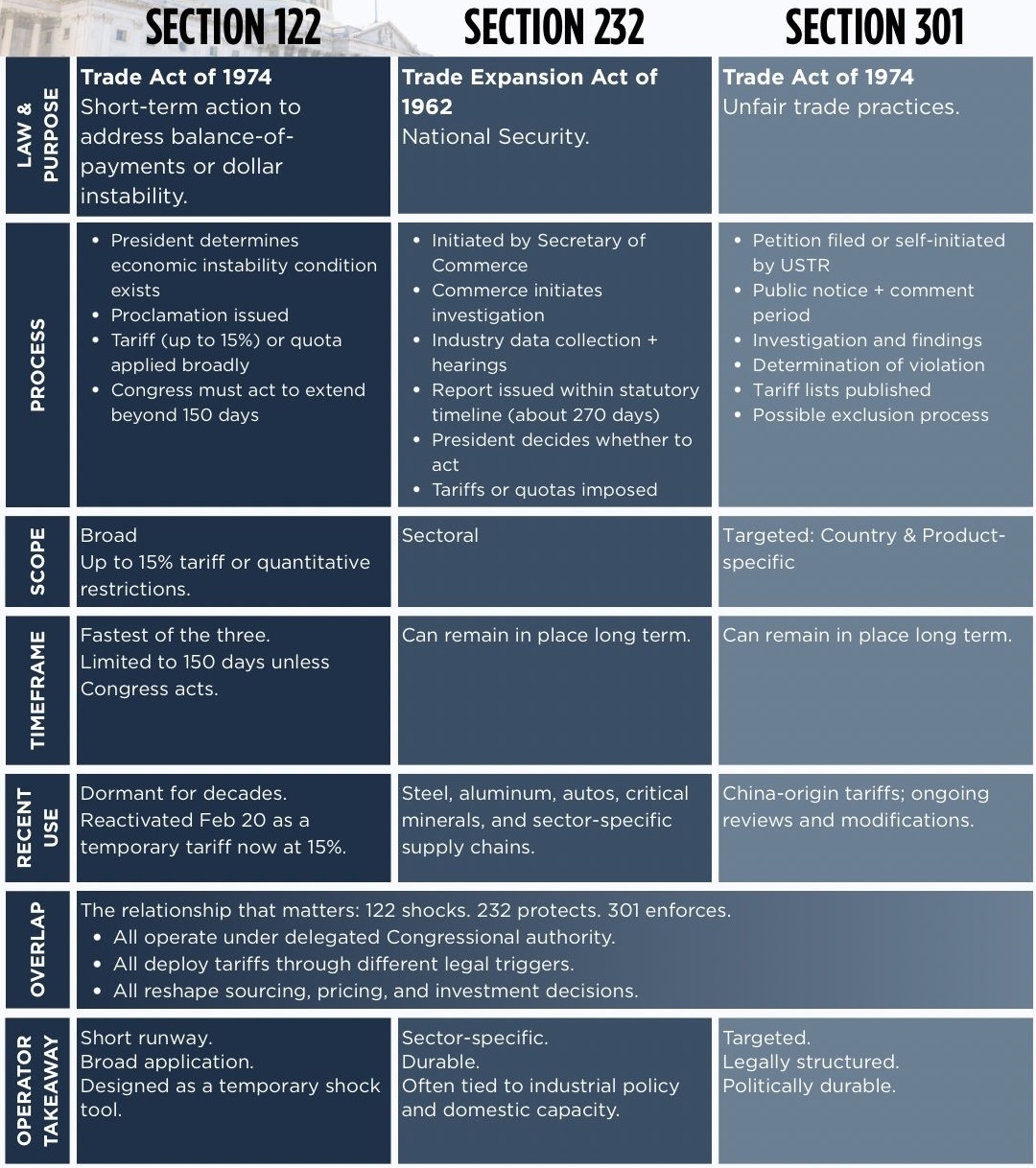
The decision does not affect the steel and aluminum tariffs that Trump ordered under Section 232, which allows the president to impose duties related to national security. All Section 301 “unfair trade practices” tariffs continue as well.
Within 24 hours of the ruling, Trump said on social media that he would immediately impose a new 10% global tariff under Section 122 of the Trade Act of 1974.
“My industry has a huge stake in trade policy,” stated Huyett CEO Tim O’Keeffe. “My country has a huge stake in the Constitution and most notably, the separation of powers. SCOTUS did its job. Now Congress needs to do theirs.”
U.S. tariffs have forced double-digit price hikes on fasteners in the past year, as well as supply chains disruptions for companies manufacturing fasteners and other metal products.
“Tariffs are bad for business,” stated Interstate Screw Corp. “That is what WE here at Interstate know. We hear it from our customers (many of whom are small businesses) and our vendors.”
At least 33% of U.S. fastener imports totaling $2.2 billion came from Taiwan in 2024, according to the U.S. Department of Commerce.
Tariffs on fasteners from China have increased by 45% since the beginning of 2025, and imports from Taiwan, Vietnam, India, Mexico, and Canada face a 25% duty.
Trump promised that imposing the highest tariffs since the Great Depression would spark a renaissance in U.S. manufacturing. But one year in, the tariffs have stifled production, with factories shedding 108,000 jobs in 2025.
Fastener industry insiders estimate the U.S. has capacity to replace about 20% of all fastener imports, hamstrung by a skilled worker shortage, machinery backlog and limited domestic wire rod capacity.
“The production capacity we need does not exist in the U.S.,” stated Semblex president Gene Simpson.