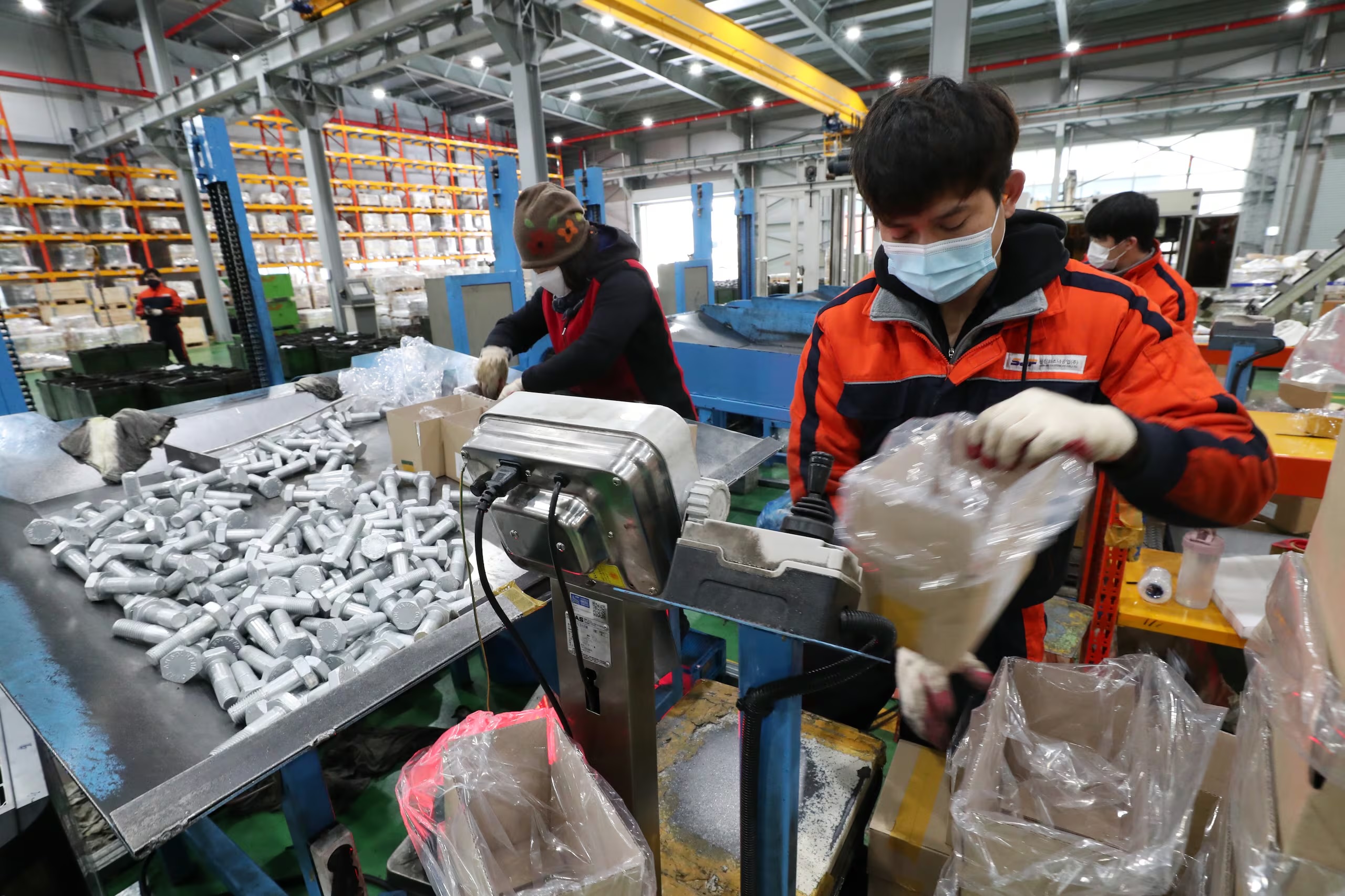
A “significant” number of fastener companies and other small and medium-sized enterprises (SMEs) in South Korea have been hit by tariffs of up to 50% following the U.S. revision in April its steel, aluminum, and copper tariff calculation method, the Chosun Daily reports. Products with high steel content, such as fasteners like bolts and nuts, molds, and automotive parts, were found to be particularly affected.
According to a survey of 600 SMEs by the Korea Federation of SMEs, 20.8% of respondents (one in five companies) reported that tariff rates on their main export items had increased after the revision. The average tariff hike for these companies reached 16.2 percentage points. In contrast, only 2.8% saw tariff reductions. Meanwhile, 40.5% remained unsure, and 35.8% reported no change.
The key change in the revision was shifting the tariff calculation basis. Previously, tariffs were applied to 50% of the value of steel content in products. Under the new system, taxes are levied based on the finished product’s customs clearance price. Products made entirely of steel, aluminum, or copper face a 50% tariff, while those with 15% or more content incur a 25% tariff on the finished product price. Items below 15% are exempt.
“Before the revision, we paid approximately 25 percent tariffs based on steel content, but after the change, it jumped to 50 percent of the finished product price,” one Korean fastener manufacturer stated.
“Imposing high tariffs on manufacturing costs, which account for 70 percent of the original price, is unreasonable.”
Buyers are demanding extended payment deadlines instead of sharing tariff burdens and refusing to reflect rising raw material costs in pricing, worsening profitability, the company added.