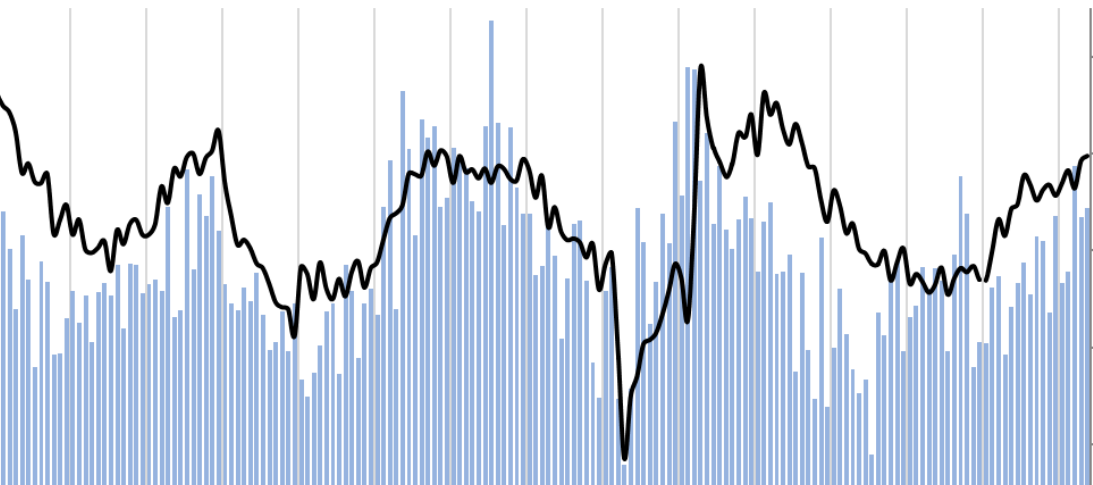
The seasonally adjusted Fastener Distributor Index improved sequentially and remained in expansionary territory for the 13th consecutive month in May, coming in at 56.9 vs. April 56.3, reflecting acceleration in employment and supplier deliveries, partially offset by a moderation in sales (though still strong) and a slight drawdown in customer inventories. The Forward-Looking Indicator (FLI) also moved higher m/m to 58.9 (57.4 last month), continuing to signal expectations for growth ahead.
Respondent commentary in May remained constructive on balance, supported by solid top-line trends, though participant mentions of softer quoting and layered cost pressures point to a more complex operating backdrop. With the FLI still expansionary and the ISM PMI accelerating to 54.0 in May (its fifth consecutive reading above 50), current conditions across the fastener market and broader industrial economy appear intact, even as dispersion in customer behavior and cost dynamics tempers forward visibility.
The FDI edged up to 56.9 from April’s 56.3, marking the second-highest monthly FDI reading in 2026 (behind March’s 59.7) and a third consecutive 55+ reading. Two of the four underlying factors (employment and supplier deliveries) improved, while sales moderated from a very strong April and customer inventory levels again acted as a drag on the index (fifth consecutive sub-50 reading).
The sales index eased to 72.4 in May from a robust 77.1 in April but remained healthy, with 59% of respondents indicating sales came in above seasonal expectations – down from 68% last month but still ahead of the ~49% average registered over the past 12 months – with 28% reporting in-line sales and 13% below this month.
The employment index accelerated to 62.5 (from 56.5), as the share of participants noting levels “higher than seasonal norms” rose to 28% from 16% (a 69% majority still report employment in line, and just 3% noted lower levels).
Customer inventories remained a modest headwind, as the share saying “lower than seasonal norms” increased slightly to 25% from 23%, though the overwhelming majority (69%) continue to say customer inventories are in line and only 6% said inventories were “too high” (unchanged from last month).
On pricing, year-over-year pricing increased for 84% of participants and remained stable y/y for 16% (vs. 87% and 13% in April, respectively). On a monthly basis, 56% of respondents saw higher sequential pricing (up from 48% in April) while the remaining 44% reported stable m/m pricing; notably, 0% saw lower m/m pricing for a fourth consecutive month – in other words, pricing has either increased or held steady m/m for four straight months.
Lastly, 25% of participants reported slower supplier lead times/deliveries this month (up from 13% in April), though the majority (66%) continue to indicate similar levels, lifting the supplier deliveries index to 57.8 (from 50).
The Forward-Looking Indicator (FLI) rose to 58.9 in May (from 57.4 in April), pointing to a modestly more constructive forward view. Factors driving this improvement included higher employment levels and leaner customer inventories. Meanwhile, the six-month outlook was a touch more cautious in the tails: 53% of respondents now anticipate higher six-month activity levels vs. today (down from 55% last month), while 13% expect lower levels (up from just 3% in April). A smaller percentage foresee similar levels (34% in May vs. 42% last month), suggesting incremental movement out of the “steady” camp toward both improved and weaker expectations.
May commentary suggests continued solid top-line momentum for many participants, though geopolitical developments, rising input costs, and uneven customer behavior are adding complexity beneath the surface. Several respondents pointed to sustained strength in May.
“May was a strong month with growth across various industries. Data centers are still driving growth but recent lagging markets are starting to emerge with growth indicators.”
“Current and new business activity is higher than expected at this point in the year,” another stated.
Even those noting slight moderation remained constructive.
“May was a good month, not quite as good as April but we hope to see continued growth in June,” one respondent commented.
Data centers continue to dominate the narrative, with one participant offering a more measured view: “Nearly everyone is attributing growth to Data Centers. It is real for some of us but it is a medium term plan. Eventually they will be built and it will become a matter of maintenance not growth. Everything else has been consistent.”
Tariffs continue to drive dollar growth and pricing volatility.
“Pricing is up due to tariffs. With 50% of value landing as the final tariff percentage on fasteners, sales can’t help but to be up in $$. Volume, last few months has been good, but not close to the percentage increase in $ $,” adding that the “U.S. fastener market is performing exceptionally well in Q1 2026 by nearly any measure — record sales for many distributors, strong order pipelines, and a robust FDI,” while cautioning on tariff-driven price inflation, supply chain complexity, soft automotive demand, and macro uncertainty.
The FDI is a monthly survey of North American fastener distributors conducted by the FCH Sourcing Network, the National Fastener Distributors Association and Baird.