With the U.S. elections complete, the guessing game has begun on how soon President-elect Donald Trump will place tariffs on imported goods -- and how high.
Seeking a return to the White House, candidate Trump vowed to impose the heaviest tariffs since the 1930s, including a 60% tax on products from China and a 10 - 20% fee on all other foreign goods. During his presidency, he imposed tariffs of up to 25% on $360 billion in Chinese imports.
But U.S. fasteners and automotive products suppliers have prepared for months for this outcome.
Executives at auto parts retailer AutoZone told investors in October that they were prepared for products they import from India, China and Germany to become more expensive.
“If we get tariffs, we will pass those tariff costs back to the consumer,” Philip Daniele, CEO of AutoZone, said on a recent earnings call. “We’ll generally raise prices ahead of — we know what the tariffs will be — we generally raise prices ahead of that.”
Likewise, Stanley Black & Decker CEO Donald Allan earlier this year told investors his company would probably “have to do some surgical price actions” to offset any new tariffs.
Automotive suppliers are not alone. U.S. companies that rely on foreign suppliers have prepared to raise prices in response to the massive import tariffs that Trump promised if re-elected.
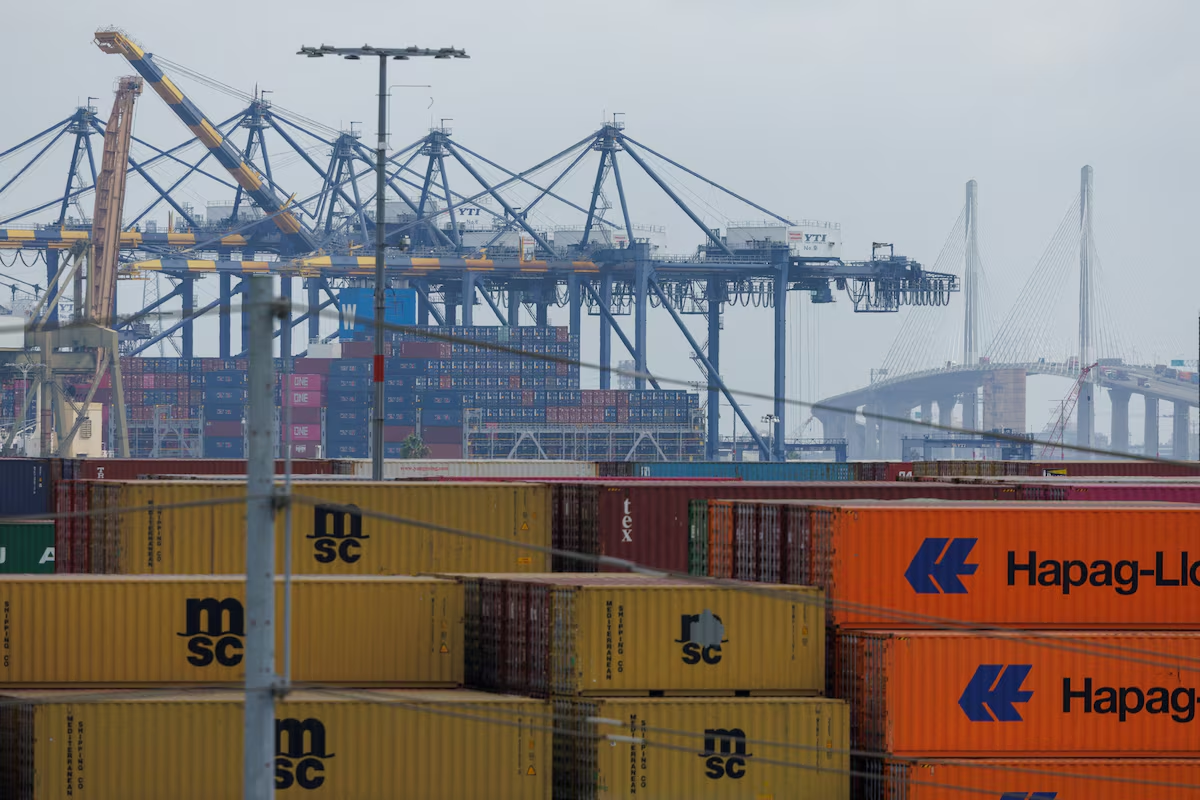
Some companies placed large import orders to stock up in the months leading up to the election. The U.S. imported 11% more Chinese goods in July and August of this year than during the same two months in 2023, according to the Census Bureau.
Other companies hope to avoid the heaviest levies by shifting to suppliers outside China.
Manufacturers hurt by China’s subsidized trade practices justify tariffs as a defensive measure.