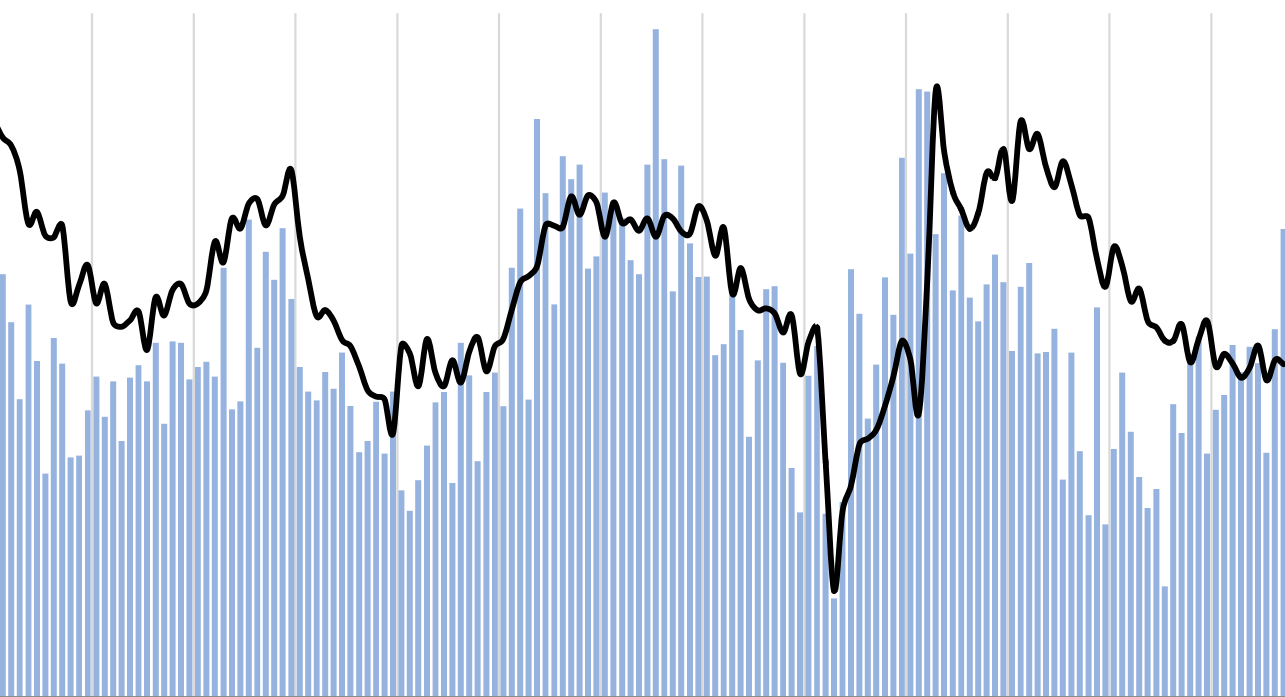
The seasonally adjusted Fastener Distributor Index (FDI) jumped to 59 in September (August 53.8), reflecting improvement across several metrics, including sales, employment, and pricing but also a favorable seasonal adjustment factor.

Meanwhile, the month’s Forward-Looking Indicator (FLI) also returned to very slight growth this month, climbing to 50.5, suggesting a relatively stable/slightly better outlook for October.
“Although an overall positive September performance for the index, taken together with other indicators… we believe fastener market conditions and the industrial economy in general remain soft but perhaps slightly better,” wrote R.W. Baird analyst David Manthey (CFA) with Quinn Fredrickson (CFA).
The September FDI surged to 59, marking the highest monthly FDI reading this year. Three of the four underlying factors (sales, employment, and customer inventories) saw m/m improvement; supplier deliveries dipped slightly lower, albeit still growing (60.7 vs August 62.9).
The sales index reached 58.4 in September, compared to 50.2 in August, indicating stronger demand and higher performance against seasonal expectations. Demonstrating the relatively stable underlying demand conditions, just 36% of respondents indicated sales came in above seasonal expectations, which is generally consistent with the 34% average registered over the past year.
Consistent with the healthy broader U.S. jobs report in September, employment levels were solid, with the 55.4 FDI employment index a step up from last month’s 50.0. Year-to-year pricing also showed a noticeably strong jump, reaching 62.5 compared to 45.2 in August, marking the highest reading this year.
FLI rises above 50, signaling stable to slightly better October expectations.
After contracting in August, the Forward Looking Index climbed to 50.5 in September.
“This marks a positive shift, driven primarily by better employment levels and a stronger six-month outlook.”
Inventory levels were a slight headwind to the index as customer inventories rose modestly (21% said customers inventories were too high this month vs. 16% in August). Respondent inventories normalized some (index was 64.3 vs. August 67.7), although a strong majority see inventory as at appropriate levels (64%).
On the outlook specifically, 39% of participants anticipate higher activity levels in the six months ahead, up from 32% in August but still at relatively muted levels. On the other hand, a segment of respondents (25%) remains concerned about lower activity in the coming months, indicating that some level of caution persists with an ongoing uncertain macro environment. The remaining 36% of participants forecast similar activity. In August, only 32% expected higher activity, 39% similar, and 29% lower. This caused the six-month outlook index to jump to 57.1 compared to 51.6 last month.
Several respondents saw healthy sales and order activity in September and an improving supply chain.
“Another surprising good month of sales. The orders come in and we ship them out.”
Similarly, “Manufacturer price increases have slowed and factory deliveries are starting to improve. The pandemic supply chain disruption created a backlog that appears to be working itself out. Slow but steady.” Others see persistently challenging supply chain conditions negatively impacting their ability to meet (otherwise healthy) demand: “September was a brisk month of activity, however, our supply chain didn't really seem to match that level of expectation. Invoicing was slowed due to product not arriving on time, otherwise we would've experienced an above average month. Bookings remain strong even though the economy is starting to show cracks.”
Those with more mixed feedback indicated an uneven cadence to recent months.
“Our U.S. orders had rebounded in August after a very slow July but [our] incoming order rate dropped back down again in September. On the bright side, our International order activity was very strong in September.”
Others expect further slowing.
“This year has been impossible to gauge. We have had mixed results, but as the year progresses, we are experiencing slowing sales, particularly over the past four weeks, with no historic correlation. Fed interest rate reductions, and inverted bond rates (among others) all point to a recession, except for Labor. [It’s] usually 3-6 months after a FED rate reduction. The average is 5.5 Years between recessions, and we are approaching 5. I'm not sure if we will avoid it, but I definitely see an impact this year.”
Fastenal reported August daily sales growth of +2.1% y/y. Fastener sales dropped 2.2%, improving from August’s 6.3% decline. Safety sales increased 5.8% and other non-fasteners grew 3.7%.
The FDI is a monthly survey of North American fastener distributors conducted by the FCH Sourcing Network, the National Fastener Distributors Association and Baird.