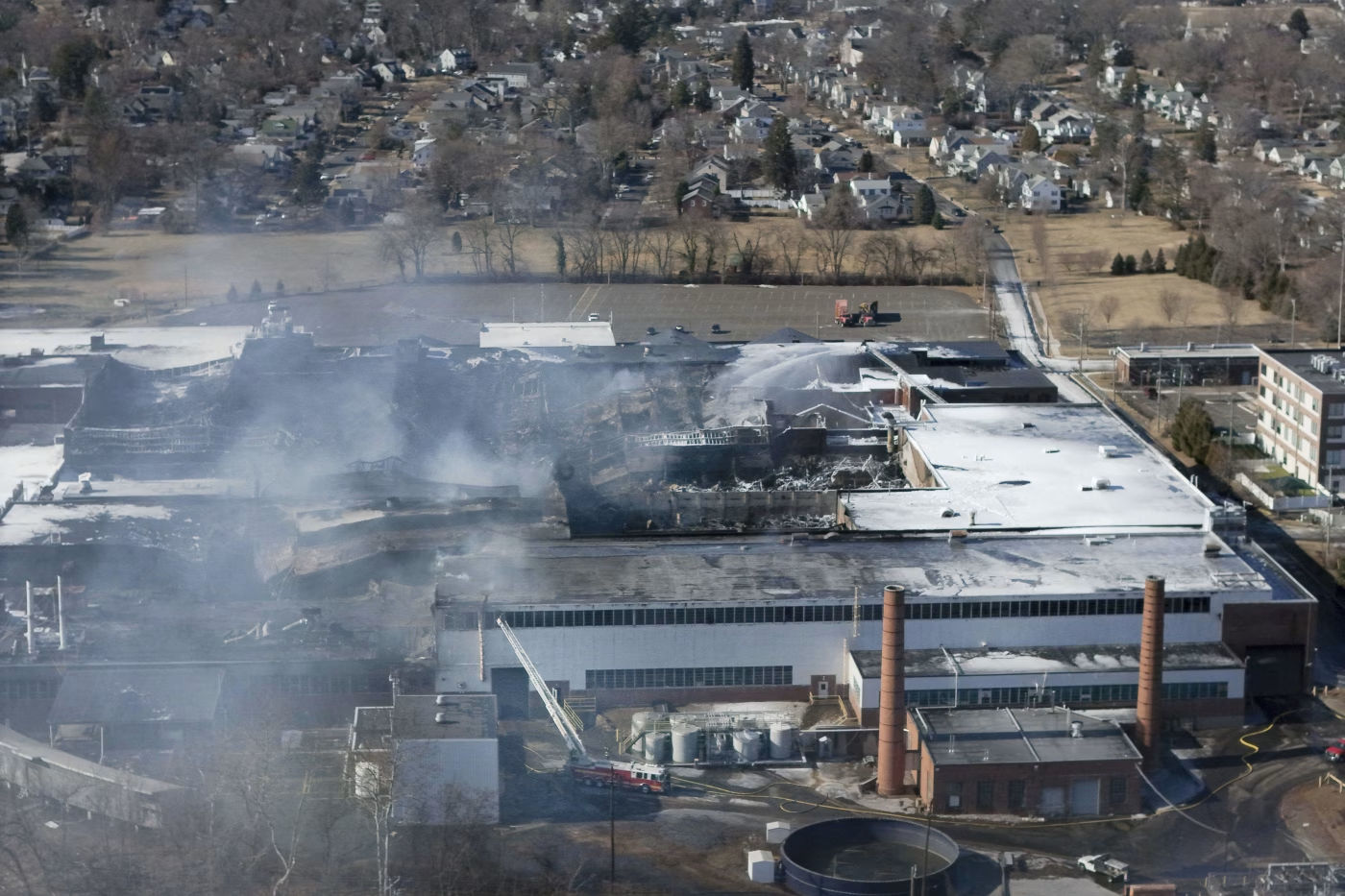
Military planners are analyzing how much the February 17 fire at the SPS Technologies fastener factory outside Philadelphia may create shortages, delay U.S. aircraft manufacturing and repairs, the Philadelphia Inquirer reports.
The Defense Logistics Agency, which helps U.S. armed forces stockpile parts for new and aging equipment, is working with manufacturers to determine the impact.
“We won’t know if alternate suppliers are necessary until the assessment is complete,” stated spokesperson Jake Boyer. He wouldn’t estimate how long that will take, noting potential shortages and solutions are “situationally dependent.”
SPS is one of a few, and in some cases the sole, supplier of specialized bolts, washers, assemblies, and other parts that keep Apache Longbow and Blackhawk attack helicopters, Tomahawk missiles, F-15 fighter jets, Boeing Stratolifter cargo planes, and other aircraft flying.
“They have equipment that’s been around 100 years that may be hard to replace,” C&L Rivet Co. owner Art Newcomb told the Inquirer. “Some of the big presses [at SPS] have been in that building since they started. They have other plants, but they’re not necessarily doing the same things.”
“New equipment today, say you need to replace a 50,000-pound press, you need a year and a half lead time. There used to be 10 [U.S.] manufacturers. Now there’s National Machinery in Tiffin, Ohio, and maybe a couple more. Or you go to Italy, Germany, the Swiss, the Japanese.” But looking abroad for machinery is not necessarily quicker.
SPS parts have been used by Boeing, General Electric, Raytheon, and other manufacturers to bolt together fighter, bomber, and helicopter aircraft; missiles; warships; and other expensive military projects, as well as in civilian aerospace and aviation programs.
SPS owner Precision Castparts, an Oregon-based division of billionaire investor Warren Buffett’s Berkshire Hathaway, has metalworking facilities in many states and countries. But Precision Castparts hasn’t made clear how or if it will make up for lost production.
Buffett admitted overpaying for Precision Castparts when he bought it for over $30 billion in 2016 and has been trying to cut costs while boosting profits from rising aerospace demand. The plant was cited by federal inspectors for failing to properly identify and speedily treat “ignitable waste” in 2023.
While “the supply chain has resiliency and redundancy, there are still patches” where the military may need new suppliers after the fire, said Chris Scafario, president of the Delaware Valley Industrial Resource Center, which directs federal manufacturing assistance funds to area companies.