U.S. President Donald Trump’s steep tariffs—25% reciprocal and an additional 25% penalty — have dealt a severe blow to India’s export-oriented industries, with Punjab's fastener manufacturers among the worst affected, the Times of India reports.
Punjab has approximately 1,500 fastener manufacturing units, with nearly 1,000 located in Ludhiana alone. These units produce highly customized fasteners tailored to the specifications of overseas clients, making it difficult to pivot quickly to new markets.
The tariffs, which came into effect August 27, have prompted cancelled orders and stranded shipments, devastating exporters.
“The fastener sector is in crisis,” Fastener Manufactures Association of India president Narinder Bhamra told the Times. “Containers that had already been dispatched are now stuck, and both buyers and sellers are in limbo.
Punjab’s fastener industry is heavily dependent on exports to the U.S., which accounted for nearly 90% of its total overseas shipments in 2024.
Last year the U.S. imported $238 million worth of fasteners from India, according to the U.S. Department of Commerce. About 20% of total Indian fastener production by quantity goes to American buyers.
For years, the U.S. has been a major market for Corona Steel Industry Pvt Ltd, which exports over 100 steel products, including fasteners. But Trump’s tariffs have significantly slowed business.
Corona GM Aditya Garodia described the tariffs as a “nail in the coffin” of his business.
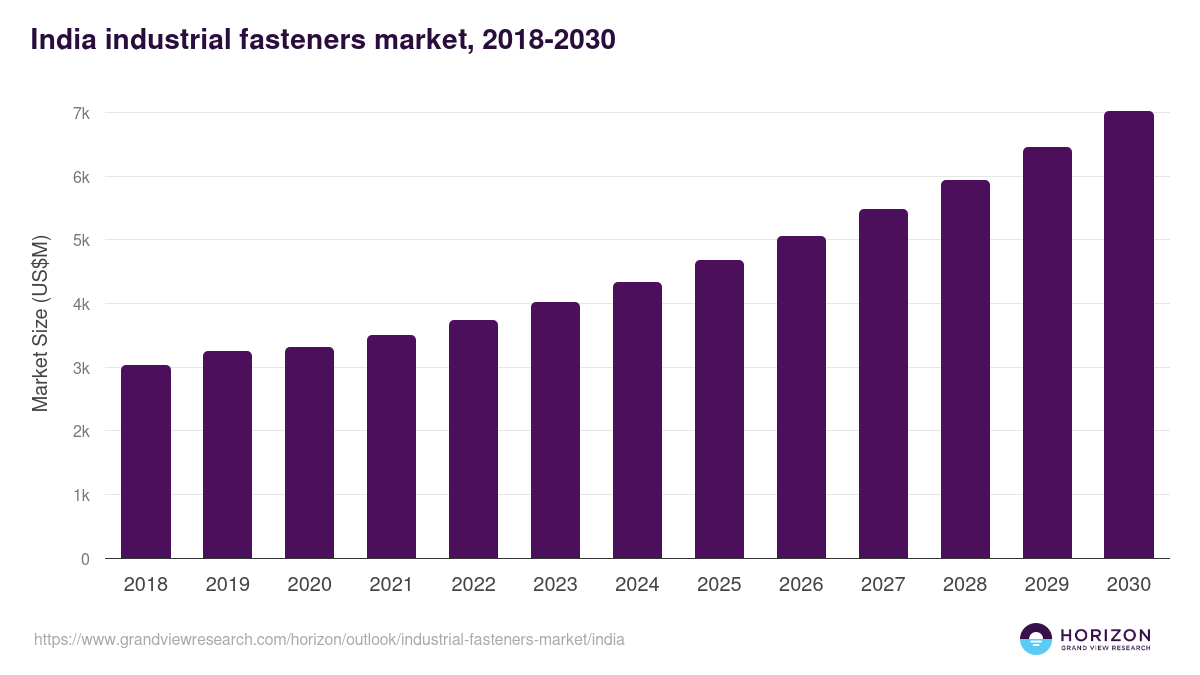
The industrial fasteners market in India generated revenue of $4.34 billion in 2024, and was forecasted to to grow at a CAGR of 8.4% to $7.1 billion by 2030, according to the Fastener Manufacturers Association of India. But that was before the U.S. tariffs hit.
In recent years, India’s fastener industry has benefited from U.S. companies looking to diversify dependance on Chinese fasteners. The situation was heightened by the escalating unrest between China and Taiwan - the two largest fastener exporters to the U.S. With Trump’s tariffs, Indian fastener manufacturers are now struggling to find new markets.
“Many of our units had structured their entire production systems around U.S. requirements,” Bhamra explained. “With those clients gone, manufacturers will need to overhaul their operations to suit new markets.”
European markets, including Germany and the UK, have expressed openness to sourcing fasteners from India as Trump’s tariffs upend international supply chains.