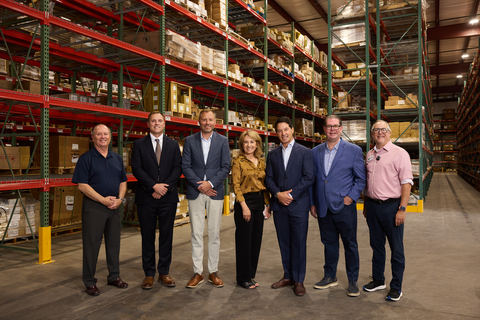
Fastener distributor Endries International launched a resource hub to help customers and suppliers navigate changing tariff regulations.
The webpage features tariff information to help customers and suppliers navigate updates and uncertainty surrounding the topic.
Endries’ Tariffs Resource Center serves as a hub for updates, insights and tools to assist suppliers and customers in navigating evolving tariff regulations.
“The scope and complexity of the tariffs the new administration has enacted are unprecedented,” according to Endries.
“A great many of Endries’ customer relationships go back decades and we have been through a lot together… recessions, pandemics, inflation, supply chain shocks… but nothing as disruptive and negatively impactful as these tariffs are proving to be.”
In 2024, metal fasteners commanded 89% of market share in the North American industrial fasteners market. Section 232 tariffs “have added a 25% tax on everything made of steel (and aluminum) that was not smelted and poured in the United States, regardless of the country of origin,” according to Endries.
For parts it imports, this tariff applies to the entire part value. For domestically sourced parts, the majority are made with Canadian steel so the tariff applies to the steel portion of those cost of goods sold, a key cost driver for fasteners.
There is a 70% tariff steel or aluminum parts from China (25% + 25% + 10% + 10%). Soon this total will rise to 95%. Parts made of steel or aluminum from other countries have a 35% tariff (25% + 10%).
“At this time, it is important to note that the reciprocal tariffs, whether those active for imports from China or those for imports from other countries that have been paused, do not apply to metal fasteners for which the above tariff scheme takes precedent,” Endries noted.
Bottom line?
“These tariffs add incremental cost that is simply too high to be absorbed by the supply chain. The margins in each link of the supply chain have grown thin over time… something that happens with stability and growth in demand.”
Each link in the supply chain is forced to pass along any incurred tariff expense.
“The long and short of it is there are no easy solutions. The decision on whether or not to source material from China is more strategic than economic for many categories of industrial fasteners.”